Oct 25, 2025
Framework
Communication™
Brand Name Architecture™
Our systematic framework for transforming brand naming from creative guesswork into strategic business infrastructure that drives positioning and market clarity.
Reading Time:
9 Minutes
Written By
Tanaka Romin
Summary
When naming feels like creative guesswork, the Brand Name Architecture™ transforms scattered brainstorming into strategic naming infrastructure.
It's our systematic, strategy-first methodology that integrates competitive positioning, audience psychology, and linguistic precision into validated naming decisions that eliminate risk and strategic misalignment.
Most naming processes fail because they treat names as creative exercises rather than strategic business decisions. They generate clever options without validating strategic fit, narrative alignment, or audience resonance.
The Framework ensures names become business assets, not creative liabilities—encoding positioning strategy, aligning with brand philosophy, and resonating with target audiences simultaneously.
→ Begin with a Clarity Catalyst Diagnostic™ to validate your naming strategy and eliminate positioning confusion.
When to Use It
Your brand needs a name. Or the current name creates confusion.
But the naming process feels scattered: brainstorming sessions generate dozens of options, preference polling creates subjective debates, and strategic validation is missing.
The gap isn't creativity—it's strategic clarity.
Most naming approaches focus on what sounds interesting rather than what strategically positions the brand, resonates with audiences, and eliminates category confusion.
The Brand Name Architecture™ exists to close that gap—turning naming from creative guessing into strategic business infrastructure that compounds competitive advantage.
What It Actually Is
The Brand Name Architecture™ is our systematic, strategy-first methodology for transforming brand naming from creative guesswork into repeatable business infrastructure.
It's not a brainstorming session. It's a validation system.
Most naming approaches work backward: they generate creative options, run preference polls, and hope the chosen name works strategically. The result is names that sound clever but create positioning confusion, require constant explanation, or fail legal validation.
The Framework integrates three naming dimensions:
Strategic Foundation — competitive positioning analysis that reveals differentiation opportunities and category signals
Identity Alignment — brand narrative integration that ensures names encode philosophy without requiring explanation
Strategic Expression — outcome clarity architecture that validates linguistic quality, legal viability, and digital infrastructure
When these align, naming becomes strategic. Names encode positioning, embody brand philosophy, and resonate with audiences—creating compound competitive advantages competitors cannot replicate through creative brainstorming alone.
This is the actual process we used to develop the People & Pillar™ name—and what we deploy when helping founder-led firms establish naming clarity that drives market positioning and brand equity.
The Real Problem It Solves
The challenge isn't generating naming options—it's validating strategic fit across positioning, narrative, and audience psychology.
Here's what happens when naming lacks strategic architecture:
Creative-first approach — dozens of options generated without strategic criteria for evaluation
Preference polling replaces validation — founders choose based on personal taste rather than strategic fit
Positioning gaps remain hidden — names selected without analyzing competitive context or category signals
Legal risk emerges late — trademark conflicts discovered after attachment to specific names
Brand building suffers — names require explanation, create category confusion, or limit future positioning
The result? Names that sound interesting but undermine strategic positioning, create friction with target audiences, or generate legal complications after launch.
From our actual experience: Most founder-led businesses treat naming as creative milestones (brainstorming sessions, aesthetic debates, preference polling) without addressing the strategic clarity gaps that naming decisions expose and either resolve or amplify across every future brand touchpoint.
Our specific solution: We start with integrated strategic assessment and systematically align competitive positioning, brand narrative, and audience psychology into validated naming decisions that create undisputed market clarity and long-term brand equity.
How It Works — Naming Architecture
The Brand Name Architecture™ treats naming as strategic business infrastructure, not creative exercise.
Every naming decision must validate across positioning, narrative, and audience dimensions simultaneously.
1. Strategic Foundation — Market Context Architecture
We begin with comprehensive competitive and category analysis that reveals differentiation opportunities and positioning constraints.
What we're analyzing:
Competitive Naming Audit™: Document 15-20 competitor names, map patterns by market position, identify differentiation gaps where no competitors occupy specific naming territory
Market Signal Mapping: Analyze how naming conventions establish category expectations, signal premium positioning, and create immediate trust or friction
Category Friction Analysis: Test name candidates with target prospects to identify cognitive barriers, pronunciation issues, or unintended associations
Real-world application:
When we assess the Strategic Foundation dimension, we're not just looking at what competitors are named—we're systematically analyzing how naming patterns shape category expectations, where differentiation opportunities exist, and how naming decisions either strengthen or undermine strategic positioning.
Our practical approach:
Instead of generating creative options first, we start with: "What naming patterns dominate this category? Where do differentiation opportunities exist? How do naming conventions affect perceived credibility and market position?"
2. Identity Alignment — Narrative Foundation Architecture
Once we understand competitive context, we validate how naming candidates encode brand philosophy and resonate with target audiences.
Architecture elements:
Brand Narrative Integration: Test whether names authentically embody brand philosophy without requiring backstory or explanation
Concept Clarity Mapping: Validate how name candidates translate abstract brand philosophy into concrete linguistic signals
Audience Resonance Assessment: Test naming options with target personas to ensure identity connection and perceived credibility
Our strategic approach:
We don't select names based on founder preference. We validate: "Does this name encode our philosophy? Do target audiences immediately connect with it? Does it create the right identity associations?"
Real-world example:
For People & Pillar™, we validated that the name encoded our philosophy (People™ + Product™ + Communication™ = pillars) while signaling founder-focused positioning and systematic clarity—differentiating from generic consultancies.
3. Strategic Expression — Outcome Clarity Architecture
Implementation means validating linguistic quality, legal viability, and digital infrastructure before final selection.
What we validate:
Solution Signal Audit™: Test whether names hint at value proposition without being too literal or too abstract
Linguistic Clarity Assessment: Evaluate pronunciation ease, memorability, phonetic appeal, and cross-cultural viability
Legal & Digital Viability: Conduct trademark screening, domain availability analysis, and social handle assessment
Our implementation philosophy:
We don't just generate creative options—we build naming systems that validate strategic fit, eliminate legal risk, and ensure names become business assets while systematically strengthening market positioning across all dimensions.
4. Naming Integration & Strategic Activation
Naming architecture isn't complete until integrated across brand identity, digital presence, and market-facing communication.
Evolution framework:
Naming effectiveness monitoring across competitive positioning and audience recognition
Market response feedback gathering to validate strategic alignment
Systematic naming integration into brand narrative and messaging architecture
Naming clarity scaling into positioning that compounds competitive advantage
Our optimization reality:
We treat naming as a strategic foundation that activates across every brand touchpoint rather than a one-time creative decision or isolated branding milestone.
What Changes When It's Working
When the Brand Name Architecture clicks, the evidence appears in clarity and positioning:
Names encode positioning — market immediately understands category, expertise level, and brand philosophy
Strategic validation replaces preference — naming decisions based on objective criteria rather than subjective taste
Legal risk eliminated early — trademark conflicts identified before attachment, not after investment
Brand building accelerates — names require no explanation, create no confusion, and strengthen positioning naturally
Competitive advantage compounds — strategic naming clarity competitors cannot replicate through brainstorming
Externally, you build uncopiable positioning. Internally, naming decisions feel confident rather than anxious.
The Philosophy Behind It
"A Name Is Your First Strategic Argument—What Can't Be Named Clearly Can't Be Positioned Powerfully"
That belief drives the Framework.
Most naming approaches fail because they focus on creative generation rather than strategic validation. They optimize for cleverness without addressing positioning clarity, narrative alignment, or audience resonance.
The Framework refuses that distraction.
Names must encode positioning strategy before creative expression. Strategic clarity compounds when naming aligns with brand narrative and market positioning. Framework-driven naming reveals hidden positioning gaps. Validated methodology creates uncopiable competitive advantages.
When naming is built strategically, it creates brand equity that compounds. Every touchpoint reinforces positioning. Market perception clarifies. Category leadership becomes visible, not claimed.
Start Here
If your naming process feels like creative guesswork, start with a Clarity Catalyst Diagnostic™.
In one focused session, we'll:
Audit competitive naming patterns and differentiation opportunities.
Validate naming candidates against strategic criteria and audience psychology.
Design naming architecture that encodes positioning and eliminates legal risk.
Set three moves to integrate naming across brand infrastructure.
Because the goal isn't to sound clever—it's to encode positioning clarity that drives market authority and brand equity.
Go Deeper
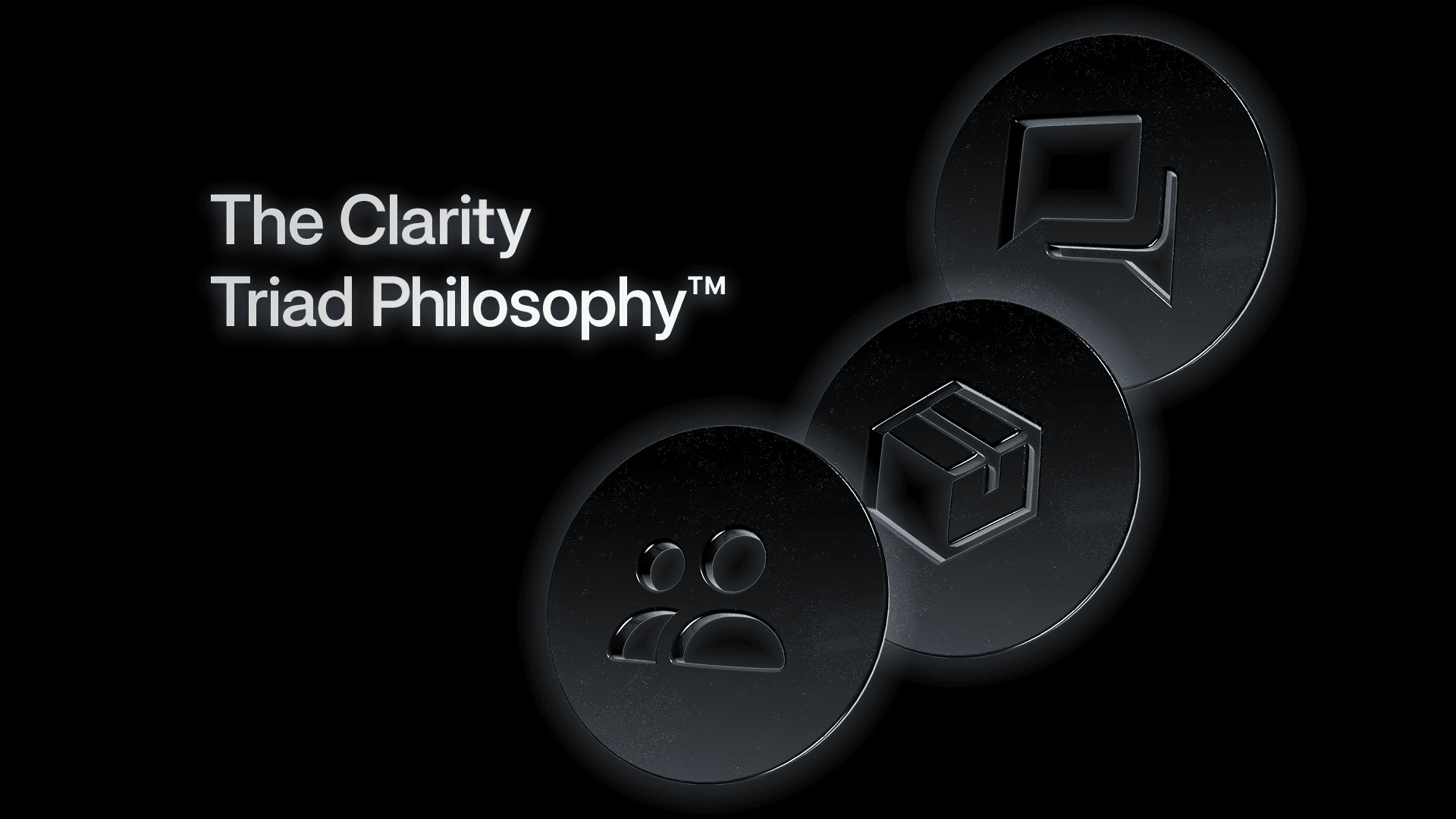
The Brand Name Architecture™ integrates with our broader Clarity Triad Philosophy™—ensuring naming (Communication™) aligns with founder identity (People™) and strategic positioning (Product™).
It's not about brainstorming options. It's about building naming clarity systematically.
Found This Helpful?
Share It With a Founder In Need.
Clarity Catalyst Diagnostic™
Go From Gusswork To
Market Command.
Apply for Live diagnostic. Tailored Clarity Map™. 90 day actionable transformation plan. Full Program credited towards recommended solution.