Oct 4, 2025
Framework
Communication™
Conversion Clarity Blueprint™
A practical model to align claim, doubt‑specific proof, and short/deep paths so pages transmit safety and guide decisions.
Reading Time:
9 Minutes
Summary
When pages look great but don't move decisions, the Conversion Clarity Blueprint™ aligns message, proof, and paths so buyers progress without pressure.
It's our systematic, founder-first methodology for transforming websites from passive brochureware into strategic conversion engines that build authority and guide qualified action.
Visual polish can hide sequencing issues: the claim isn't repeatable, proof doesn't answer doubts on that section, and CTAs jump commitment levels.
The Blueprint treats conversion as the result of a believable claim, doubt-specific proof, and two clear paths to act.
→ Begin with a Clarity Catalyst Diagnostic™ to align your message, proof, and conversion paths.
When to Use It
Your website looks professional. The design is clean. The copy reads well.
But first calls still spend the first fifteen minutes re-explaining what the site should have made obvious. Proposals carry the entire persuasion load. Buyers ask for "another call" instead of moving forward.
The gap isn't visual quality — it's conversion architecture.
Most websites fail because they lack strategic clarity, not visual appeal. They're built around what the business wants to say rather than what the market needs to hear to trust and convert.
The Conversion Clarity Blueprint™ exists to close that gap — turning passive websites into strategic engines for trust, authority, and qualified conversion through systematic architecture.
What It Actually Is
The Conversion Clarity Blueprint™ is our systematic methodology for transforming websites and sales assets from passive brochureware into strategic conversion engines.
It's not web design. It's conversion architecture.
Most businesses approach websites backward: they focus on looking impressive, sounding professional, or matching competitor aesthetics. The result is polish without performance — sites that win design awards but don't move buyers through decisions.
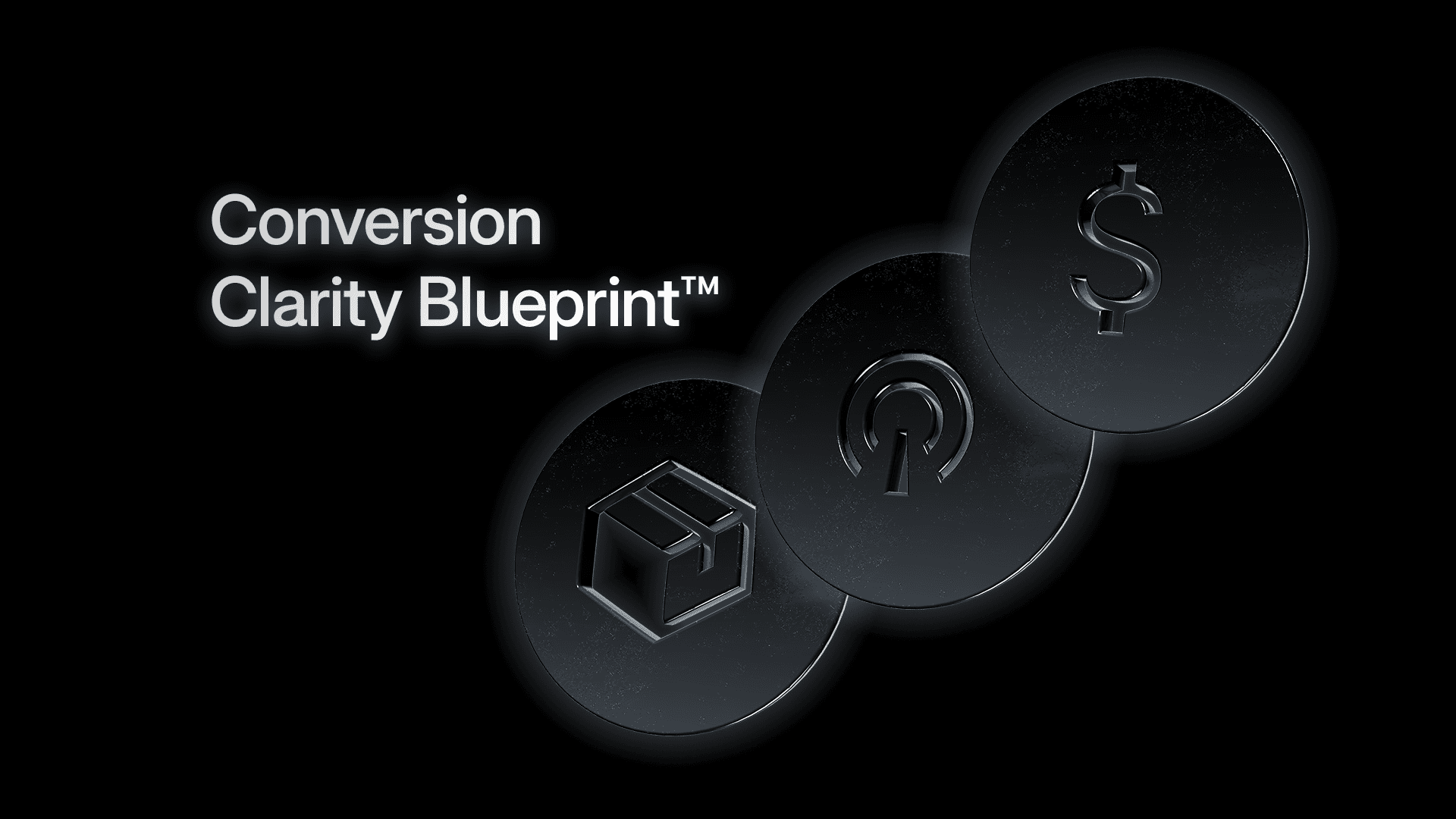
The Blueprint integrates three conversion layers:
Message fit — a defensible claim buyers can repeat internally
Proof architecture — evidence mapped to specific doubts and placed where friction appears
Decision paths — short route for deciders and deep route for evaluators, both visible
When these align, conversion becomes natural. Heroes pass the five-second test. Sections answer buyer questions in order. Objections shrink where proof was placed. Calls focus on scope and timing, not re-explaining value.
This is the actual process we used to build the People & Pillar™ website — and what we deploy when helping clients create authority-building digital presence that converts expertise into qualified opportunities.
The Real Problem It Solves
The challenge isn't getting traffic — it's converting visits into qualified movement.
Here's what happens when conversion architecture is missing:
Claims sound good but don't travel — messaging is "professional" but prospects can't repeat it to stakeholders
Proof exists but sits in wrong place — case studies are on a separate page when doubt appears on the hero
Paths jump commitment levels — "book a call" when buyer needed "see more proof first"
Structure follows internal org chart — sections organized by department instead of buyer questions
The result? Buyers browse but don't believe. First calls become re-pitches. Proposals work too hard because the site didn't build trust.
From our actual experience: Most professional service websites look impressive but don't convert because they're built around what the business wants to communicate rather than what prospects need to hear to trust and invest.
Our specific solution: We start with the founder's authentic expertise and systematically translate that into digital authority that builds trust and drives qualified conversion.
How It Works — Conversion Architecture
The Conversion Clarity Blueprint™ treats websites as strategic conversion systems, not digital brochures.
Every element must answer: "Does this build belief or create doubt?"
1. Deep Audit & Collaborative Discovery
We begin with comprehensive audit of current digital presence, messaging gaps, and conversion pathways.
What we're evaluating:
Five-second test: Can a visitor answer "what you are, why you, what happens next" immediately?
Message-market fit: Does positioning translate into qualified interest or just awareness?
Proof-doubt mapping: Does evidence appear where specific objections emerge?
Path clarity: Are both "evaluate" and "book" routes visible with no dead ends?
Real-world application:
When we built our own People & Pillar™ site, we had to reconcile our founder expertise in strategy with how that translated into digital authority. We discovered gaps between our strategic capability and how that was being communicated online.
Our practical approach:
Instead of generic questionnaires, we have focused conversations around: "Walk us through your ideal client's journey from not knowing you exist to becoming a paying client. Where does that break down currently?"
2. Strategic Architecture & Conversion Mapping
Once gaps are clear, we map complete website architecture prioritizing authority-building sequence and conversion levers.
Architecture elements:
Message hierarchy: Claim and subline that aligns "proof, pitch, and pathway" with actual value creation
Doubt-proof placement: Evidence mapped to buyer objections (Capability, Relevance, Timeline, Trust) and positioned where friction appears
Page structure and CTA logic: Based on client readiness stages, not random placement
Two-path navigation: Short route for fast deciders and deep route for evaluators
Our strategic approach:
We don't start with wireframes or design. We start with: "What does someone need to believe about your expertise to invest R35,000 with you? Now, how do we systematically build that belief through the website experience?"
Real-world example:
For People & Pillar™, we structured the site around our frameworks and client journey — not generic "About/Services/Contact" structure but strategic flow that builds authority and moves visitors toward engagement.
3. Collaborative Build & Validation
Implementation means building and validating content, user experience, and conversion points with continuous founder input.
What we build:
Content and messaging systems with founder voice codified
Proof placement where doubts actually appear in buyer journey
Two-path navigation systems (evaluate and book) with no dead ends
Measurement systems tracking authority-building and lead generation, not just traffic
Our implementation philosophy:
We don't disappear into development mode. We build collaboratively, showing progress and getting strategic input throughout, ensuring the final result reflects founder expertise authentically.
4. Continuous Improvement & Strategic Evolution
Conversion architecture isn't static — it evolves as founder expertise and market positioning develops.
Evolution framework:
Conversion performance and authority-building effectiveness monitoring
Real client interaction feedback and website performance data gathering
Strategic message and conversion element refinement based on market response
Website evolution as founder expertise and market understanding develops
Our optimization reality:
We don't just "launch and forget" — we treat the website as a living strategic asset that grows with the business and market understanding.
What Changes When It's Working
When the Conversion Clarity Blueprint clicks, the evidence appears in behavior and conversations:
Heroes pass five-second test — visitors grasp what you are, why you, what's next immediately
Sections organized by buyer questions — not internal team structure
Objections shrink where proof appears — doubts get answered before they become blockers
Calls focus on scope and timing — not re-explaining what the page should have built
Proposals become scope docs — not persuasion documents
Externally, you see qualified movement. Internally, sales feels lighter because trust was built systematically through the site.
The Philosophy Behind It
"Clarity compounds — what you can't articulate, you can't scale or sell."
That belief drives the Blueprint.
Most websites fail because they focus on what the business wants to say rather than what the market needs to hear to trust and convert. They optimize for aesthetic perfection rather than strategic trust-building.
The Blueprint refuses that distraction.
Founder vision must drive the process. Every element must serve conversion. Authority positioning comes first — before aesthetics, before functionality. Collaborative discovery reveals blind spots founders can't see alone.
When you build websites as conversion architecture, you create digital assets that compound. Every visitor who converts reinforces that the system works. Every call that starts from trust proves the architecture succeeded.
Start Here
If your site looks great but doesn't move decisions, start with a Diagnostic™.
In one focused session, we'll:
Audit top conversion surfaces for message-proof-path alignment.
Map proof to buyer doubts and fix placement.
Design two-path navigation (evaluate and book).
Set strategic moves to install conversion architecture.
Because the goal isn't to look impressive — it's to build trust and drive qualified movement.
Go Deeper
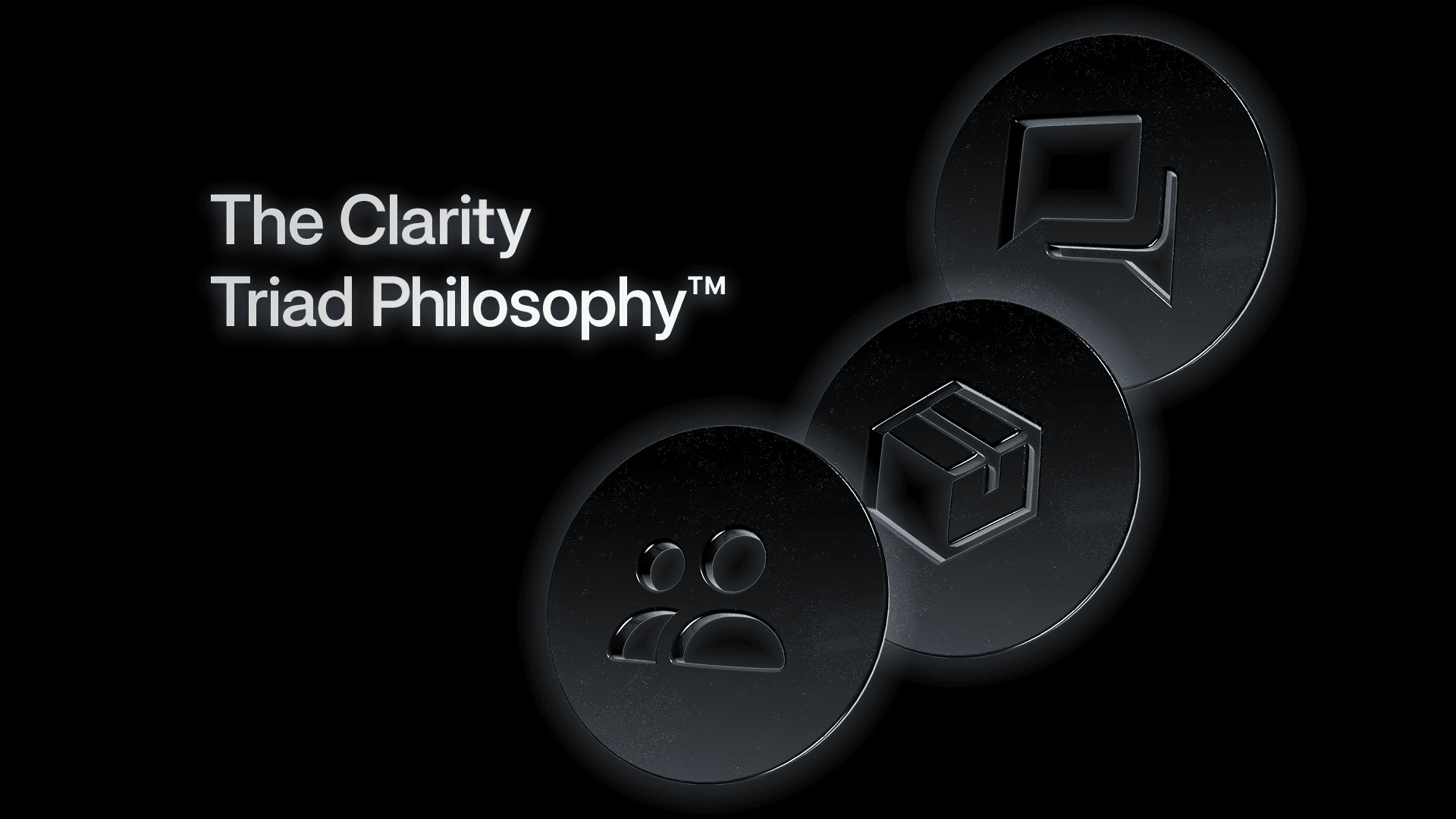
The Conversion Clarity Blueprint™ integrates with our broader Clarity Triad Philosophy™ — ensuring website communication (Communication™) aligns with founder identity (People™) and service promises (Product™).
It's not about winning design awards. It's about building systematic conversion.
Found This Helpful?
Share It With a Founder In Need.
Clarity Catalyst Diagnostic™
Go From Gusswork To
Market Command.
Apply for Live diagnostic. Tailored Clarity Map™. 90 day actionable transformation plan. Full Program credited towards recommended solution.